Buying guide
How to Choose Wooden Toys That Last
What to check before you buy for a busy toddler
Published 14 March 2025 · 5 min read
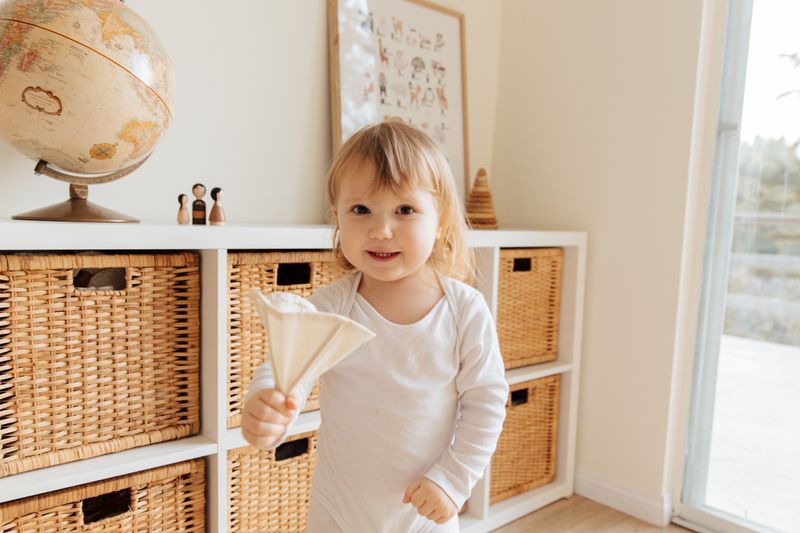
A wooden toy earns its spot in the playroom the moment it survives a full week with a toddler. That means teething, a drop from the high chair, and a wipe-down after a juice spill. If it comes through all three without chipping, cracking or going soft at the edges, it stays. If not, it ends up at the back of the shelf.
The first thing to do in a shop is run a finger along every edge and corner. A well-finished piece feels smooth all the way around, including the inside of the puzzle holes and the underside of the base. Rough patches, visible glue lines or a sharp lip are signs the sanding was rushed.
Check the finish, not just the wood
Look closely at what sits on top of the wood. A thin oil or water-based paint soaks in and stays put. A thick varnish sits on the surface and tends to chip off in flakes once a toddler starts chewing on a corner. If the finish looks glossy and plastic-like, ask what it is. A shop that cannot answer that question is usually not the right place to buy from.
Wood species matter too. Beech and rubberwood are dense and hold up well to teething and daily knocks. Softer woods dent easily and can splinter along the grain after a few months of hard use. You do not need to be a carpenter to spot the difference: heavier pieces with a tight, even grain are usually the tougher ones.
Ask how it should be cleaned
Most wooden toys only need a damp cloth and air drying. Never soak them in the sink, and skip the dishwasher even if the label is vague about it. Water gets into the grain, the wood swells, and joints loosen. If a shop tells you to scrub wooden blocks with soapy water, that is a warning sign about how the piece was made.
For daycare teachers and grandparents setting up a shared play space, this matters even more. A toy that has to be wiped down between children needs a finish that tolerates it. A toy that needs careful handling will not survive a room of twelve toddlers.
What to look for in the hand
- -Smooth edges on every side, including the inside of holes and cut-outs.
- -A tight, even grain and a weight that feels solid rather than hollow.
- -An oil or water-based finish, not a thick varnish that flakes.
- -Simple joints and screws that can be tightened if they loosen over time.
- -Cleaning instructions that allow a damp cloth, not a soak.
None of this takes long once you know what to look for. Two minutes in the shop saves a replacement six months later, and it means the toy you hand a toddler is one that will still be in the playroom when the next child arrives.